
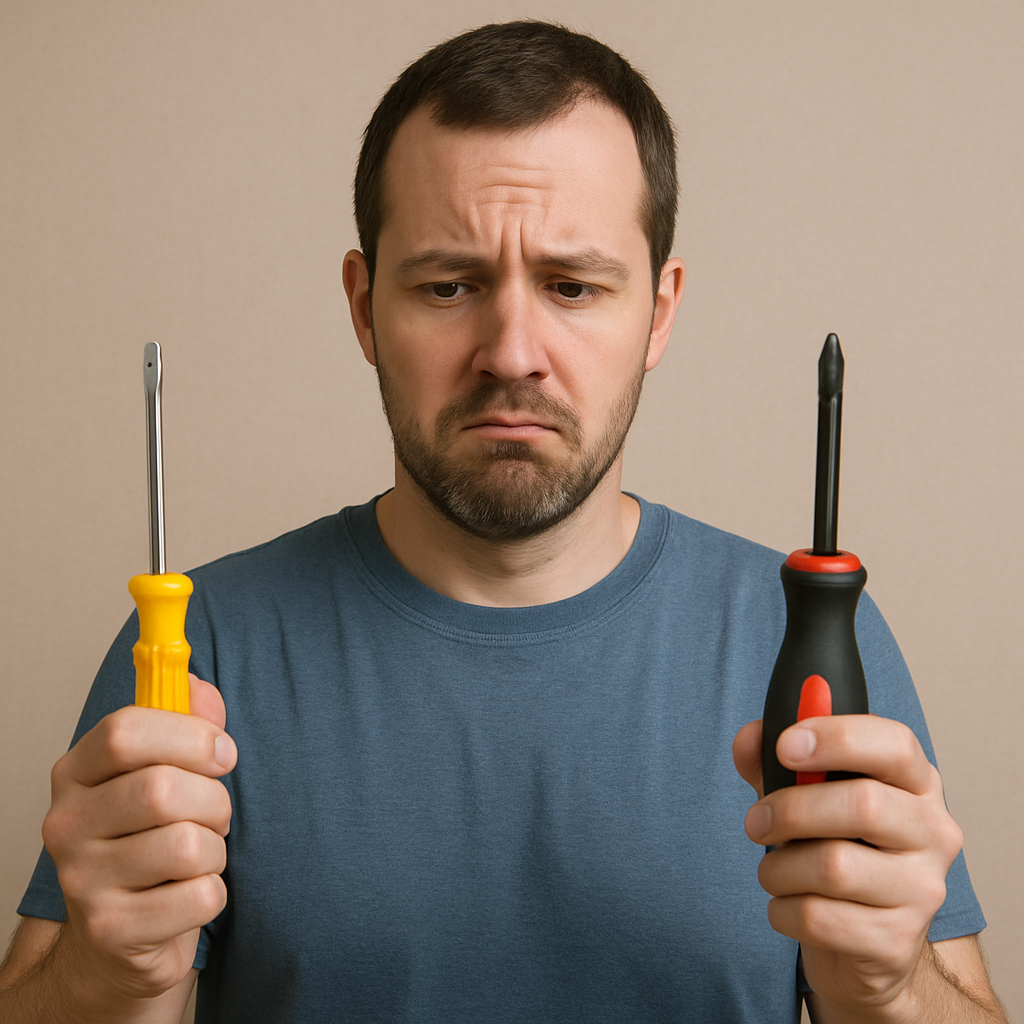
The thin one. The one with the cross thing. Flathead. Phillips. You’ve seen them both. Maybe you’ve tried to use them interchangeably. Maybe you’ve stood in front of your dad’s workbench wondering which one he actually needs.

There’s no shame in mixing them up, but there’s a good reason they’re different.
Let’s clear it up without any over-explaining. Here’s what each one is for, why it matters, and how to stop stripping screws every time you pick the wrong tool.
What’s the Actual Difference?
Flathead:
- Single straight blade
- Fits screws with one horizontal slot
- Invented in the early days of mechanical fastening
- Tends to slip out of the screw head under torque
Phillips:
- Cross-shaped (+) tip
- Fits screws with a cross slot
- Designed to cam out (slip slightly) at high torque to prevent overtightening
- Easier to center and control under pressure
Why This Matters in Real Life
Using a flathead on a Phillips screw is a guaranteed way to ruin the screw head and frustrate yourself.
Using a Phillips on a flathead screw just won’t work because the tips don’t match.
And using the wrong size of either? That’s how you chew up the hardware and make a 5-minute job into a half-hour swear session, and accidentally reinforce the belief that being handy isn’t your thing.
When to Use Each One
Use a Phillips screwdriver when:
- You’re assembling modern furniture
- Driving screws into drywall or studs
- Working with electronics or general-purpose home items
- You want better grip and less slippage
👉 Recommended: Wera Kraftform Phillips #2 Screwdriver
Comfortable grip, hardened steel, laser tip for a firm bite.
Use a Flathead screwdriver when:
- Working on older hardware or fixtures
- Installing wall plates, outlet covers, or vintage hardware
- You’re dealing with a slotted screw — and only a slotted screw
👉 Already covered in our first post in the series — check it out if you missed it.
A Quick Tip: The Combo Driver Trap
Ever seen a screw that looks like both a flathead and a Phillips? That’s a combo screw. This is usually found in budget furniture kits or electrical fixtures.
They can accept both types of drivers, but a Phillips is almost always the better choice. Less slipping. Cleaner turn.
Final Thought
Don’t let tool confusion slow you down or make you feel less competent.
Once you know the difference, you’ll never look at a screw the same way again. And you’ll reach for the right tool with confidence.
Check out my other recent articles!
- Best Chainsaw for Homeowners: Safety Features Every Beginner Should Know
- Mulching Leaves vs Raking: The Best Way to Tackle Fall Cleanup
- Essential Fall Tools Every Homeowner Should Own Before the Leaves Take Over
- Milwaukee PACKOUT Review: The Modular Tool Storage That Actually Holds Up
- How to Fix a Toilet That Keeps Running (Without Calling a Plumber)
Note: This post contains affiliate links. If you click and buy, I may earn a small commission — at no extra cost to you. Thanks for supporting The Gentleman Fixer.
Leave a Reply