
You can tell a lot about a driver by the air in their tires.
You do not need to be obsessive about it, but you should know how to check tire pressure properly and trust the reading when you do. Low tire pressure can hurt your gas mileage, wear your tread faster, and make braking or turning less safe. It is quick to fix and even quicker to forget.
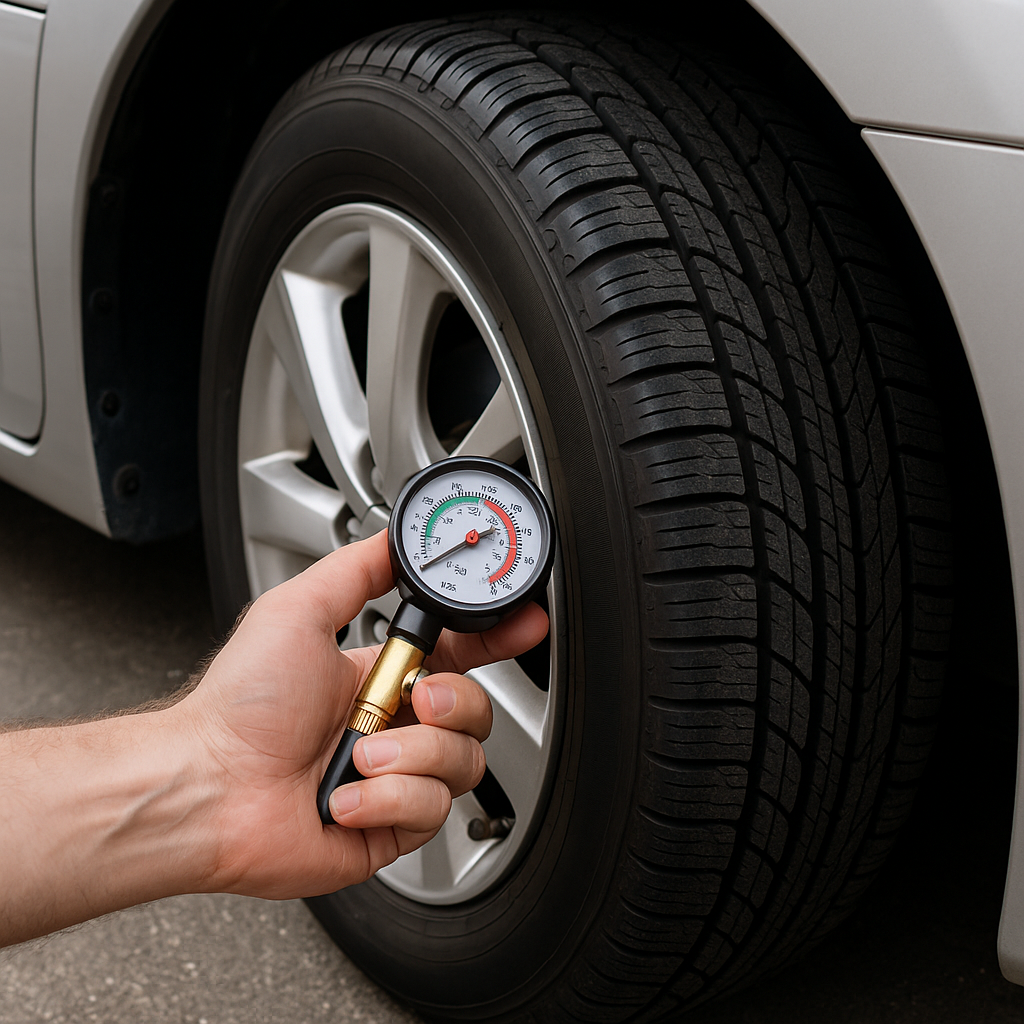
If your tire pressure warning light is on, or you want to make sure your tires are safe, here is how to check tire pressure step-by-step, along with the tire pressure gauge I keep in my own glove box.
Step-by-Step: How to Check Tire Pressure
- Find the recommended PSI for your vehicle: Do not go by the number printed on the tire sidewall. Open your driver’s side door and look for a sticker near the door frame. This will list the correct PSI (pounds per square inch) for both the front and rear tires. Most passenger vehicles fall between 32 and 36 PSI. The National Highway Traffic Safety Administration recommends checking your tire pressure at least once a month.
- Use a tire pressure gauge instead of guessing: Tires often look fine even when they are dangerously low. A good gauge is the only way to know for sure. Learning how to use a tire pressure gauge step-by-step will give you confidence and accuracy.
- Remove the valve cap and take your reading: Unscrew the valve cap from the tire. Press the gauge firmly onto the valve stem until the reading locks in. You will hear a quick hiss of air. That is normal.
- Check all four tires: Do not assume the other tires match the first one you check. Tires can lose air at different rates due to wear, temperature changes, and small leaks.
- If any are low, fill them up and recheck: Use a decent portable air compressor or stop by a gas station. Some gauges even attach to inflators, but I prefer a standalone gauge for accuracy.

The One I Use and Recommend
This one is affordable, reliable, and simple. Add this to your glovebox or your vehicle tool kit and it’ll come in handy.
JACO ElitePro Tire Pressure Gauge (60 PSI)
- ANSI Certified for accuracy
- Solid brass construction, no batteries
- Glows in the dark, so you can use it early or late
- Holds the reading until you reset it (so you’re not squinting mid-hiss)
It’s not digital, and that’s a feature. This is a tool I like keeping in the glove box. One of those rare buys that does the job, every time.
Check out my other recent articles for more tips!
- Best Chainsaw for Homeowners: Safety Features Every Beginner Should Know
- Mulching Leaves vs Raking: The Best Way to Tackle Fall Cleanup
- Essential Fall Tools Every Homeowner Should Own Before the Leaves Take Over
- Milwaukee PACKOUT Review: The Modular Tool Storage That Actually Holds Up
- How to Fix a Toilet That Keeps Running (Without Calling a Plumber)
Note: This post contains affiliate links. If you click and buy, I may earn a small commission — at no extra cost to you. Thanks for supporting The Gentleman Fixer.
Leave a Reply