
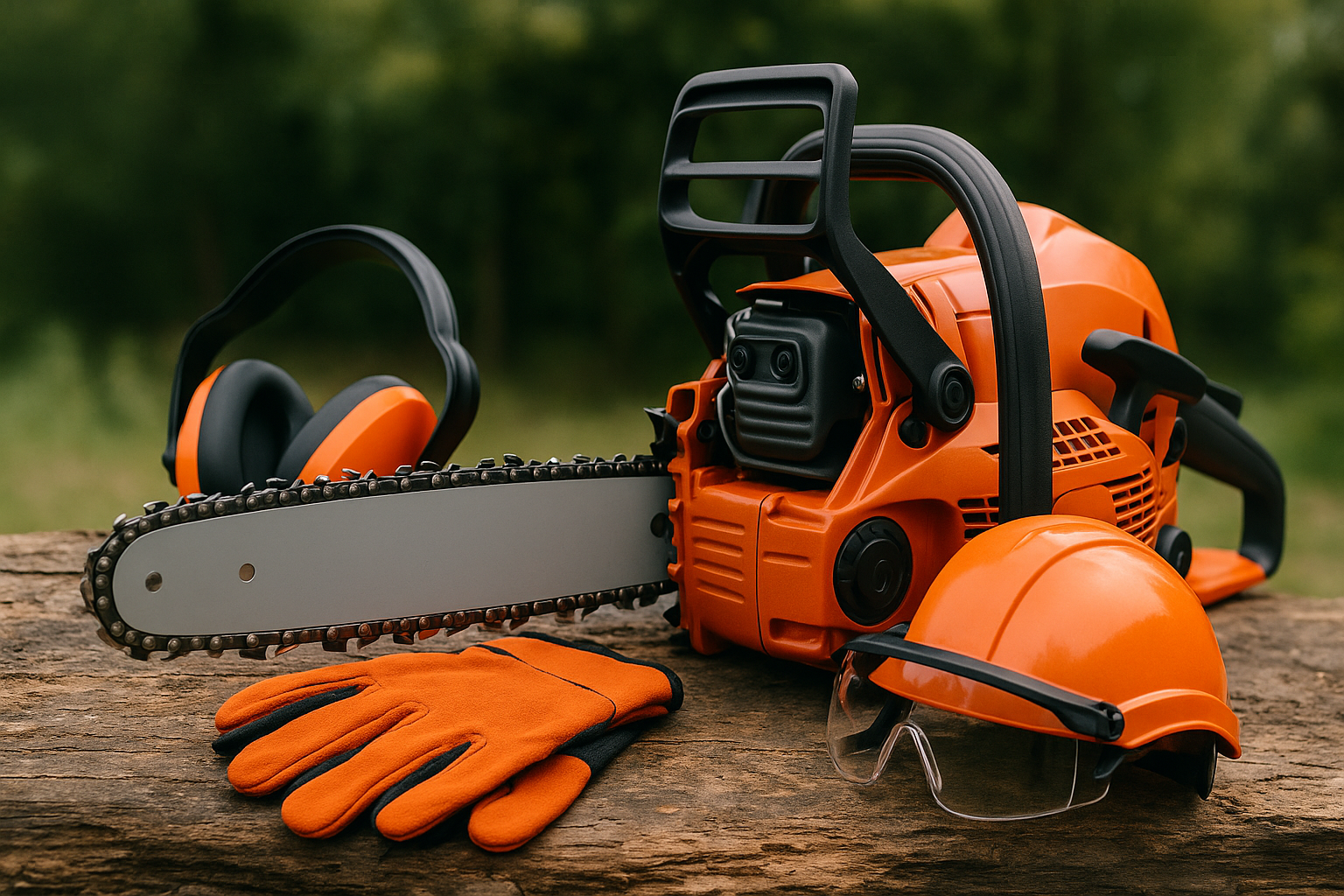
Having a yard means that at some point you will likely have branches that need cutting. Sometimes it is a storm that drops them. Other times it is just tree that finally lets go of a dead limb. Either way, at some point, you are likely going to need a saw.
An important choice comes to mind quickly: gas, or battery? Gas has power, but it also has weight, fumes, and the joy of fighting with a pull start. Battery has come far enough that for most people it is now a dependable choice. You charge it, you pick it up, it runs. No fuel mixing, no maintenance headaches.
There are pros and cons to each. With that said, whichever way you go, the features that keep you safe matter most.
Safety Features Beginners Should Look For
Low Kickback Bar
Kickback is when the saw jerks up because the chain caught. It happens fast and it can rattle your confidence. Look for a low kickback bar. A 12 inch bar, like what comes on the DEWALT 20V MAX 12-Inch Chainsaw, is sized well for homeowners and easier to control.
Chain Brake
A chain brake stops the chain instantly if the saw bucks back. It is the single most important feature for a beginner. Do not buy a saw without it.
Tool Free Chain Tensioning
Chains loosen while you cut. If adjusting takes tools, you might be tempted to skip it. Skipping it is unsafe. Tool free tensioning lets you keep the saw cutting clean without hassle.
Lightweight Build and Balance
Heavy saws make you sloppy. Look for something under ten pounds with the battery. Balance matters too. You want a saw that stays steady in your hands.
Brushless Motor Efficiency
If you choose battery, a brushless motor is worth it. It runs longer on a charge and keeps power steady so the saw does not stall mid cut.
Folding Saw vs Chainsaw
Not every job needs a chainsaw. A folding hand saw like the Corona Razor Tooth 10-Inch Curved Saw can handle limbs up to five or six inches thick. It folds closed so the teeth are covered and it tucks into a tool bag.
When the branches are bigger or there are more of them, then you reach for the chainsaw to save yourself substantial time and energy.
What I Use
For small jobs I carry the Corona Razor Tooth Folding Saw. It is sharp, simple, and cheap insurance against wasting time on little limbs with a power saw.
For the heavier jobs, my go to is the DEWALT 20V MAX 12-Inch Chainsaw. It has the low kickback bar, it stays under ten pounds, and it runs long enough that I can clear a yard on one charge. Tool free tensioning means I can keep it dialed in without searching for tools.

Other Options Homeowners Choose
Not everyone buys DEWALT. These are three other chainsaws you will see homeowners go for:
Stihl MS 170 Chainsaw– Trusted name, simple homeowner model, good balance, easy to handle.
EGO Power+ 14-Inch 56V Chainsaw – More runtime and a longer bar. Heavier but built tough.
Greenworks 12-Inch 40V Chainsaw – Lighter, cheaper, and fine for small yards or light cleanup.
They all cut. I choose the DEWALT because it strikes the right balance of weight, power, and durability for the money. But I wouldn’t recommend any of these options if they weren’t solid.
Safety Gear That Belongs With Any Saw
A chainsaw is only as safe as the person holding it. Do yourself a favor:
- Cut resistant gloves keep your grip strong and protect your hands.
- Clear safety glasses stop chips from blinding you.
- Protective chaps protect your legs. Safety is more important than looks. You look best with all the limbs you started with.
- Bar and chain oil is not optional. Buy it when you buy the saw. No oil, no cutting.
- Helmet with visor and earmuffs. Don’t be stupid. Be safe.
A Few Basics Worth Repeating
Check your footing before you cut. Do not cut directly overhead. That is how people get hurt. Inspect your chain before you start. Loose or dull is asking for trouble. Stop when you are tired. Fatigue and chainsaws do not mix. Wear. The. Gear.
Final Word
The best chainsaw for a homeowner is not the biggest or the meanest. It is the one that keeps you safe, stays under control, and gets the job done without turning into a headache. A folding saw for small limbs. A chainsaw with the right safety features for the bigger work.
Are you ready for the rest of your fall cleanup?Read: Essential Fall Tools Every Homeowner Should Own Before the Leaves Take Over
Note: This post contains affiliate links. If you click and buy, I may earn a small commission — at no extra cost to you. Thanks for supporting The Gentleman Fixer.
Leave a Reply